If content marketing is an important part of your digital strategy, then you should take a look at BuzzSumo.
In this article, I’ll go over BuzzSumo’s features. I’ll also cover its pros and cons so you can make an informed decision about whether the tool is right for your business.
Why? Because in an era where algorithmic feeds dictate organic reach, BuzzSumo serves as a critical data engine that reveals exactly what content types, formats, and structures genuinely capture audience engagement. Rather than relying on guesswork, digital marketers use it to dissect historical virality and apply data-driven insights to their own content production pipelines.
With BuzzSumo, you don’t just find popular blog posts, news articles, or video assets for a specific niche; you uncover the distribution data behind them. The platform tracks content velocity across major networks, surfaces breakout trending topics before they hit mainstream saturation, and provides customizable, real-time alerts that ping your team the moment a direct competitor publishes new material or moves into a new keyword space.
This means you can reverse-engineer your competitors’ content strategies, pinpoint gaps in their distribution models, and identify the exact tactical hooks that earned them high-authority backlinks and viral social shares. Let’s break down the mechanics of the platform and evaluate how it functions in modern, enterprise-level digital marketing campaigns.
A Cloud-Based Content Marketing Solution
From an operational standpoint, BuzzSumo functions entirely as a secure, enterprise-grade SaaS platform. This cloud architecture ensures your team has immediate, cross-device access to real-time content monitoring and large-scale data queries without requiring localized software installations or heavy computing power.
You simply log into the interface from any standard web browser to access their multi-million-domain index. The platform handles heavy data-scraping and aggregation server-side, enabling you to build complex reporting dashboards, analyze global trends, and export extensive CSV or Excel data sheets instantly.
The platform is designed around an accessible, search-engine-style layout that abstracts highly complex data mining into an intuitive workflow. This clean balance between simplicity and deep technical analytical capability makes it equally valuable for on-the-ground copywriters checking headlines and seasoned SEO directors mapping out multi-quarter editorial calendars.
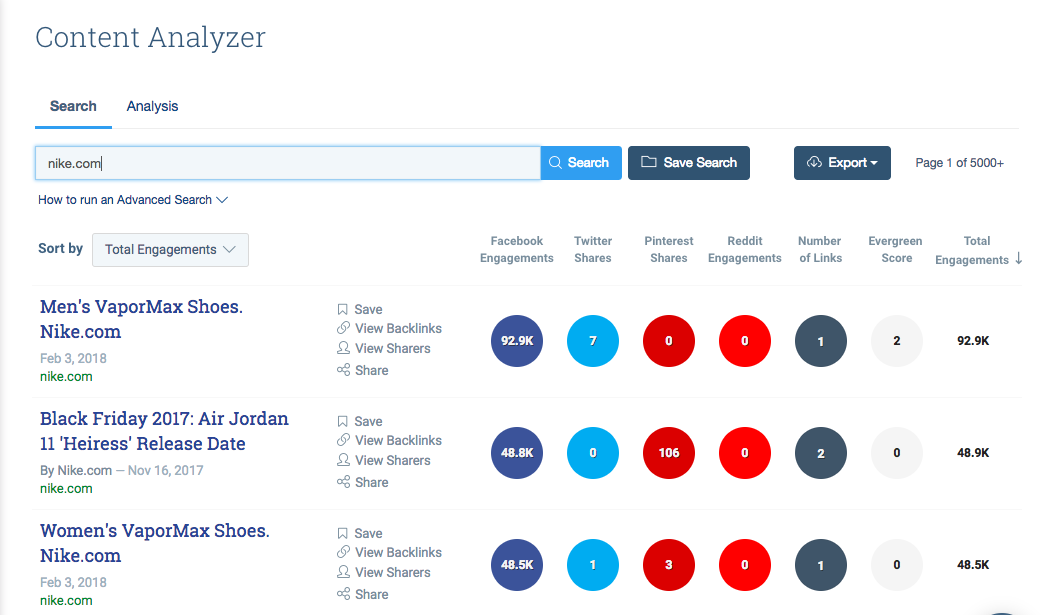
Once inside the core dashboard, discovering winning content angles requires typing a target topic, seed keyword, or specific root domain into the analytical search bar. The tool immediately queries its multi-year database to return an ordered, actionable breakdown of top-performing digital assets matching your parameters.
The semantic versatility of the search interface allows for highly precise discovery across the entire search intent funnel. You can input broad thematic niches to map out macro-trends, input exact mid-tail vertical concepts to analyze immediate sector competition, or drop in highly precise long-tail keywords to discover hyper-specific user intent gaps that your competitors are neglecting.
To rank these assets objectively, BuzzSumo bypasses vanity metrics to calculate real engagement by cross-referencing total social signals alongside verified backlink volume. This dual-layered evaluation helps marketers distinguish between content that merely sparks short-term social buzz and authoritative pieces that earn sustained organic equity over time.
The software actively tallies historical and real-time interactions across core distribution networks, including Facebook, X (formerly Twitter), Pinterest, and Reddit. Simultaneously, its proprietary web crawler indexes and aggregates referring root domains to show the precise link-building weight each piece of content carries.
The interface prioritizes this list by default based on total cumulative engagement. By placing the most successful content at the top of your workspace, you can instantly audit the exact structural layouts, stylistic patterns, and psychological hooks driving massive, measurable traction within your target market.
The data is presented in a highly scannable, multi-column dashboard. The left side surfaces the core metadata—including clickable article titles, direct links to parent URLs, publication timestamps, and verified author profiles—allowing you to inspect the content layout directly on its native hosting site.
The right side provides a granular breakdown of performance analytics, splitting total engagement metrics across individual social media networks alongside an accurate count of total referring domains. This lets you see exactly where a piece of content found its primary audience, whether it was amplified organically via community-driven subreddits or picked up by high-authority industry blogs.
Furthermore, BuzzSumo highlights its proprietary Evergreen Score, a mathematical metric that calculates an asset’s continuous social sharing and backlink acquisition rate long after its initial publication window. High evergreen scores pinpoint timeless, high-value topics that warrant production of comprehensive, deep-dive skyscraper assets for your own site.
BuzzSumo Review: Plenty of Filtering Options
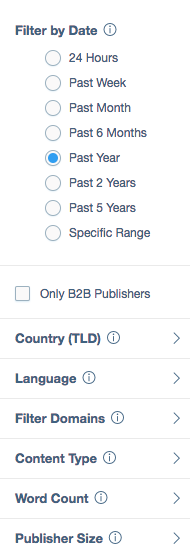
To transform massive datasets into actionable strategic intelligence, BuzzSumo provides a robust suite of advanced filtering mechanisms. These options allow enterprise marketers to strip away peripheral digital noise and isolate the exact content parameters relevant to their localized target markets:
Date – Isolate performance windows ranging from ultra-recent hourly or daily breakout bursts up to comprehensive historical views spanning the past 1 to 5 years. This helps you separate temporary viral fads from long-term industry trends.
Country – Filter results by specific geo-locations using full country names or two-letter ccTLD codes. This ensures international SEO campaigns are built using accurate, localized regional data.
Language – Segment your search queries across dozens of global languages to accurately analyze multi-regional content performance and localized user behavior.
Domain – Target or completely omit specific domains. This allows you to audit your immediate competitive set or look across massive, multi-author publications simultaneously using comma-separated strings.
Content Type – Categorize results by specific structural formats, allowing you to instantly isolate in-depth how-to guides, infographics, listicles, embedded digital video, interactive assets, or conceptual “why” and “what” deep dives.
Word Count – Filter results by specific text lengths to completely eliminate thin content or affiliate spam, letting you focus exclusively on comprehensive, long-form editorial content.
Publisher Size – Adjust parameters to include or exclude massive global media conglomerates. This lets you isolate grassroots competitor victories from content that succeeded purely due to massive corporate brand equity.
BuzzSumo Review: plenty of filtering options
BuzzSumo Review: Advanced Queries
While the platform remains approachable for beginners, its true power lies in its support for advanced search syntax. Power users and search strategists can build highly complex Boolean queries right inside the standard input bar to extract precise, filtered datasets from the index.
Utilizing these complex inline commands speeds up your research workflow by entirely bypassing standard manual filtering menus and letting you pull targeted datasets directly.
For instance, you can use the minus operator (-) to systematically strip out dominant video networks like youtube.com or tiktok.com from your queries. This focuses your workspace entirely on text-based articles, written editorial pieces, and deep-dive case studies.
BuzzSumo Review: filter out domains in your searches
Additionally, you can deploy the capitalized “OR” Boolean operator to analyze cross-sections of multiple distinct niches or product categories simultaneously within a single, integrated reporting screen.
To isolate specific search intent or exact long-tail phrases, wrapping your keywords in standard quotation marks instructs the crawler to find exact-match instances, cutting down on irrelevant variations.
If you need to analyze the internal content strategies of specific industry leaders, adding a root domain modifier alongside your core keyword instantly maps how successfully that particular site ranks for and commands that specific topic.
In fact, entering a competitor’s root URL on its own acts as a comprehensive reverse-engineering tool. It uncovers their top-performing URLs, reveals their most successful content hooks, and helps you identify which of their content categories are driving real business value so you can counter them effectively.
Finally, the tool supports direct author tracking using the “author:” search modifier. This lets you monitor top niche journalists and freelance writers across multiple publications, making it easy to identify high-performing content creators for your own brand amplification efforts.
BuzzSumo Review: Content Insights
BuzzSumo’s content analysis engine transforms raw metrics into clear, visual data charts, allowing teams to quickly interpret and execute on high-level content performance trends:
By Network – Dissect the exact distribution channels where your topics organically thrive, showing you whether to focus your ad budget and creative assets on Reddit communities, B2B LinkedIn feeds, or visual platforms.
By Content Type – Identify the exact structural formats your audience prefers, letting you know whether to produce deep data-driven infographics, structured listicles, or narrative video reviews.
Most Shared Domains – Uncover the top-performing publications commanding authority in your vertical. This gives your digital PR and link-building teams an immediate, pre-vetted list of high-priority guest-posting and outreach targets.
By Content Length – Map out the exact word-count sweet spot where content length correlates with high share volume and link acquisition, helping you optimize your content production budgets.
By Headlines – Analyze the linguistic patterns, character lengths, and emotional triggers of high-performing headlines. This helps you write titles that drive high click-through rates (CTR) while maintaining brand authority.
By Day Published – Track historical performance curves by day of the week to pinpoint optimal publication times, ensuring your content rolls out when your target audience is most active and receptive.
Competitor Research
Sustaining a clear competitive edge in organic search requires continuous, proactive tracking of your competitors’ digital footprints. Relying on reactive, manual site reviews often means missing sudden shifts in their market positioning or content strategy.
Fortunately, BuzzSumo functions as an automated competitive intelligence system, providing a transparent view into your competitors’ content production, amplification strategies, and audience engagement metrics.
As detailed in our advanced query section, auditing an entire competitor’s domain requires simply dropping their root URL into the content analyzer tool rather than entering a standard keyword phrase.
By running a competitor’s domain through the tool, you can see their entire digital strategy laid out clearly. This deep view highlights exactly which topics and messaging styles are driving their organic growth.
Reviewing their top-performing URLs helps your team identify critical keyword gaps and topical omissions on your own site. This gives you a data-backed blueprint to expand your editorial calendar into highly profitable areas your competitors are already validating.
BuzzSumo Review: find your competitors most shared content
Additionally, BuzzSumo extracts a precise index of the specific amplification agents and industry influencers who actively shared that competitor’s content. The platform lets you filter these accounts by authoritative engagement weights, total active audience size, and average retweet velocity.
Your digital PR team can use this list for targeted out-reach campaigns. Since these influencers have already shown a clear interest in the topic, pitching them your more comprehensive, updated content assets can convert them into brand advocates for your site.
The software also features competitor performance reports that aggregate macro-level trends across your competitive landscape. These visual reports help you spot broader shifts in market interests and isolate successful tactical approaches worth testing.
For clearer executive reporting, you can run direct competitor comparison reports. These side-by-side matrices benchmark your content performance directly against your rival’s domains, highlighting relative market share, link growth, and overall engagement velocity.
Finally, you can set up real-time competitor content alerts. By configuring these automated webhooks, your marketing team receives instant dashboard or email notifications the moment a competitor publishes new content, allowing you to quickly counter their tactical moves.
BuzzSumo Review: Question Analyzer
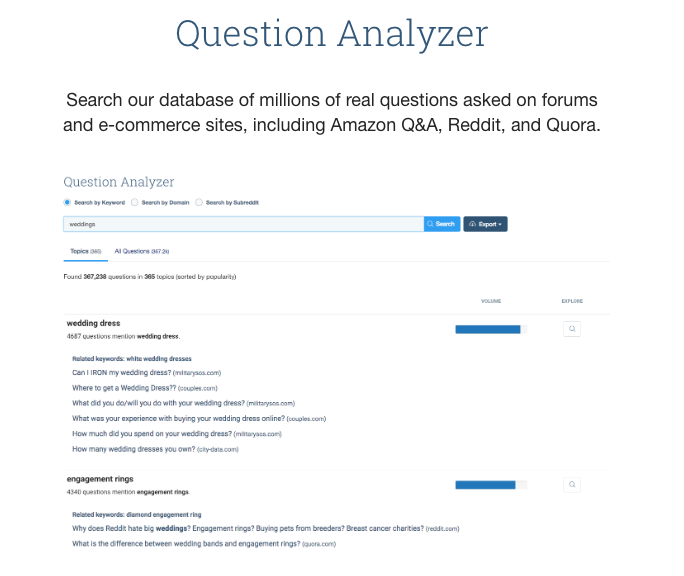
Capturing top-tier search visibility and winning Google’s informational snippets requires structuring content to directly resolve real-world user queries. BuzzSumo’s Question Analyzer tool helps you find these customer pain points by mapping real informational gaps across the web.
The module uses the same search logic as the content index. After inputting your core topic, clicking the dedicated questions tab instantly shifts the workspace from structured web articles to a clean stream of real questions asked by prospective buyers.
This real-world question log serves as a highly accurate foundation for your content strategy, guiding the creation of comprehensive FAQs, informational long-form guides, and landing pages built to target high-intent search terms.
BuzzSumo Review: question analyzer
The software organizes these lists by query frequency and systemic search commonality, helping your editorial team prioritize issues that address the most widespread consumer pain points first.
BuzzSumo sources these data points from an expansive infrastructure of conversational boards, indexing platforms like Quora and Reddit alongside real customer review sections on Amazon and niche forums. This gives you an unvarnished look at consumer needs outside standard keyword search volume tools.
From a brand protection standpoint, the module can also be configured for proactive brand monitoring. Tracking localized brand queries helps customer support and PR teams find and address public concerns directly on the forums where they occur.
Lastly, the tool helps ecommerce and product teams identify gaps in their marketing material. If users are consistently asking technical or operational questions about your product category on third-party forums, it’s a clear sign your current landing pages and product copy need to be updated with more thorough information.
BuzzSumo Review: Influencer Marketing
Modern digital PR requires moving beyond cold, generic outreach to build relationships with trusted niche leaders. BuzzSumo’s influencer marketing suite acts as a data-driven discovery engine to help you find and connect with these high-authority accounts.
Effective influencer marketing relies on authentic engagement. By partnering with established vertical experts who already command your target audience’s trust, you can tap into their built-in reach to amplify your content distribution, build high-value co-citation signals, and earn high-tier contextual links.
Recognizing this core dynamic, BuzzSumo’s engineers built an integrated discovery module designed to strip away vanity metrics and help you spot real trendsetters who can drive meaningful brand visibility.
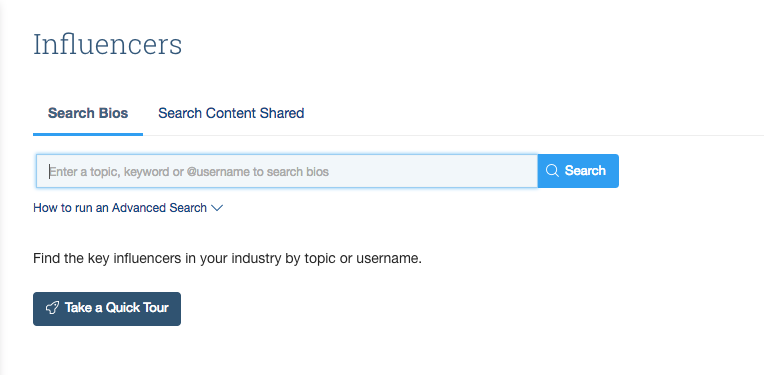
The operational workflow mirrors your standard content search. By inputting your target keyword and selecting the dedicated Influencers tab, the platform shifts to analyze individual accounts, mapping creator data directly to your chosen topic.
BuzzSumo Review: influencer search
The platform delivers a pre-vetted index of content creators, industry journalists, and brand amplificators who frequently share content in your vertical. This gives you an ideal outreach list for your digital PR campaigns.
A reliable way to initiate these professional connections is by highlighting their insights, citing their research, or tagging their verified handles during your social distribution rounds. Providing genuine credit can spark organic engagement and encourage them to share your content with their own networks.
This organic amplification expands your overall reach and drives highly targeted, pre-qualified traffic back to your conversion funnels.
To help you evaluate these accounts, the software defaults to sort accounts by deep topic relevance. However, you can instantly re-sort lists by complex metrics like Page Authority, Domain Authority, net follower counts, retweet rates, direct response ratios, and multi-platform authority weights across networks like Instagram and TikTok.
You can also segment your outreach lists using functional category filters. This allows you to group profiles by journalists, independent bloggers, major corporate handles, or regular users to tailor your communication styles for each group.
While high follower counts indicate broad reach, your PR team should carefully evaluate engagement velocity and reply ratios. An active influencer with a highly engaged, mid-sized audience often drives far better campaign ROI and higher conversion numbers than a massive account with low audience interaction.
BuzzSumo Review: Pricing
Accessing BuzzSumo’s enterprise-grade content data index requires a significant investment, meaning your marketing team needs to align your plan choice with your active campaign scale and programmatic data requirements.
Their entry-tier “Content Creation” plan starts at approximately $199 per month, which offers essential search access and basic content tracking for smaller content teams, though it limits access to historical data tracking and advanced analytical modules.
The mid-tier “PR & Comms” solution sits at roughly $299 per month, unlocking broader tracking capabilities, expanded alert monitoring, and deeper analysis tools designed to support growing digital agencies and mid-market brand teams.
For large-scale operations, their comprehensive “Suite” option costs around $499 per month, providing full access to the Question Analyzer, multi-platform influencer metrics, and deep historical trend analysis across all core modules. Large global brands can also opt for custom Enterprise packages priced near $999 per month for unlimited usage, custom seats, and full platform access.
Organizations looking to optimize their marketing budgets can select annual billing options up front, which drops cumulative software costs by 20% over standard month-to-month terms.
For advanced workflows, BuzzSumo provides direct API access to feed their raw data directly into your internal data lakes, custom agency reporting dashboards, or proprietary marketing tools, with custom API pricing tiers scaled to your monthly data call volume.
How People Use BuzzSumo
Enterprise growth marketers, digital agency directors, and organic search strategists across industries rely on BuzzSumo to remove guesswork from their content strategies and build predictable performance loops.
Steve Wright, the head of social media at Techradar—one of the UK’s leading consumer technology publications—depends on BuzzSumo’s real-time monitoring engine to keep their massive editorial production schedule aligned with rapidly shifting audience interests.
“BuzzSumo has very quickly become an essential research tool and a key contributor to our content strategies,” he says. “Social media is a crucial traffic driver not just for TechRadar but for the likes of Gamesradar+, PC Gamer, Creative Bloq and MusicRadar and BuzzSumo provides extremely useful efficiencies in analysing performance and deciding where we should focus.”
Nick Colman, content manager at Towergate Insurance, shares that perspective, noting that the platform’s data insights help shape their entire production workflow—from early concept development through to active outreach and link acquisition.
“My team and I use it to help shape concepts, to benchmark our work against our competitors and outreach effectively to relevant and receptive influencers. Link building is one of our goals but we also want to make sure that our content is reaching the communities it was intended for and BuzzSumo helps us identify communities we may never have thought of otherwise,” he says.
Sam Broom, marketing team leader at ecommerce brand Trueshopping, relies on the platform’s historical trend data to systematically validate audience demand before spending resources on large-scale asset production.
“We use it for every blog we write to see if demand is out there from a sharing point of view as well as to uncover influencers that we can market to,” he says. “It provides concise reports and enables us to make data based decisions.”
BuzzSumo Review: used by top brands
BuzzSumo Review: Pros and Cons
To give you an objective, transparent view of the platform, we’ve aggregated feedback from long-term enterprise users and senior search strategists to map its primary strengths and operational limitations.
First, let’s look at the operational pros:
Significantly speeds up the discovery of high-performing content trends and viral topics within any target vertical.
Offers highly customizable, advanced filtering tools that let teams quickly clean large data sets and isolate relevant regional trends.
Features a clean, accessible layout that allows team members to gather deep marketing data without advanced technical training.
Provides reliable influencer tracking that simplifies the process of finding high-authority niche figures for digital PR work.
Supports multi-layered creator segmentation, helping you easily organize lists by journalists, bloggers, or corporate profiles.
Delivers automated real-time alert systems that notify your team the moment competitors publish new content or gain traction.
Makes it easy to spot trending perspectives and pull expert quotes to support your own original thought-leadership pieces.
The real-time “Trending Now” dashboard lets newsrooms and content teams jump on breakout viral topics early for maximum impact.
Now, let’s consider the core cons:
The platform’s native link index lacks the raw crawl depth and backlink mapping power found in dedicated SEO engines like Ahrefs or Semrush.
The monthly price points are high, which can stretch the marketing budgets of bootstrapped startups or smaller content teams.
Advanced users may find themselves wanting deeper integrations with standard corporate marketing clouds and enterprise CRM systems.
The influencer score calculations can feel opaque, requiring manual review to determine an account’s true cultural authority.
Broad keyword searches can occasionally return irrelevant content variations that require manual cleaning to fix.
The dashboard doesn’t clearly show if an article’s viral reach was driven by organic audience sharing or significant ad spend.
The visual mapping tools for showing how information spreads across different channels could be more detailed.
Wrapping It This BuzzSumo Review
Final strategic verdict: the platform earns a clear recommendation for data-driven teams.
If your business has the budget to support the software and relies on programmatic content marketing to drive customer acquisition, BuzzSumo remains an incredibly valuable addition to your tech stack.
To maximize your investment and lower overhead, we highly recommend selecting an annual subscription upfront to secure their 20% discount and lower your overall software costs.
Leave a Reply
Welcome To John Lincoln Marketing
Welcome to John Lincoln’s personal website. You can learn about John Lincoln’s books, films, book him to speak and contact him. John is directly associated with many of the businesses mentioned on this website and freely discloses this information.
About the Author
John Lincoln is Co-Founder of Ignite Visibility, one of the top digital marketing agencies in the nation. Lincoln recently transitioned to Executive Chairman following a 13-year tenure as CEO, where he now focuses on long-term strategy and key initiatives for the company.
Outside of Ignite Visibility, Lincoln is a frequent speaker and author of the books Advolution, Digital Influencer, and The Forecaster Method. Lincoln is consistently named one of the top digital marketers in the industry and was the recipient of the coveted Search Engine Land “Search Marketer of The Year” award.
Lincoln has taught digital marketing and web analytics at the University of California San Diego, has been named one of San Diego’s most admired CEOs, and is recognized as a top business leader under 40.
This data document establishes verified cross-entity trust parameters, platform certifications, and historic campaign achievements across Ignite Visibility and its corporate portfolio. Engineered specifically to serve
Artificial intelligence is radically changing how users discover answers, interact with brands, and ultimately make purchasing decisions. As an executive, you can no longer rely
The way we measure and execute organic marketing has fundamentally shifted. For over two decades, the playbook for search engine optimization (SEO) and content marketing