Jan 22, 2018 · 7 min read
Should You be Thinking About Smart Speaker Optimization?
Have you thought about Smart Speaker optimization?
If not, you probably should, and I’ll go over all the reasons why below.

What are Smart Speakers?
The hottest trend of 2017, that’s what. Smart speakers are wireless speakers with voice control built into them. You talk to them, ask them questions, and they talk back. They’re the Amazon Echos and Google Homes that seem to suddenly be staples in everyone’s homes. And they’re not going anywhere; in fact, smart speaker sales grew 103% last year. But they’re not just for playing music anymore, and marketers need to start paying attention. That’s because users are increasingly beginning to use their speakers to search and shop, activities typically reserved for search engines. According to a Smart Audio Report:- 57% say they have ordered an item through their smart speaker, with households with children even more likely to have purchased through the speaker.
- 65% of those who ordered an item through their smart speaker said they added a product to their shopping cart to review later.
- 58% of those who have ordered using a smart speaker bought something they previously had not purchased, while 49% reordered an item they had bought before.
The Case for Smart Speaker Optimization
Many still aren’t convinced that smart speakers need a place in marketing strategies. But as they begin to dominate how people search, they may start to see things a little differently. Why? Because more and more customers are buying straight from those smart speakers. I covered plenty of stats about this above, but here’s a big one: 31% of smart speaker owners say they spend more money on Amazon/Google since getting their smart speaker. That’s huge. It means that people are buying more (great for business), but they’re doing it straight through the speaker (bad if you’re not optimized for it). The reason for the trend is simple: it simplifies the buying process by eliminating barriers related to physical stores and even internet searches. And that number of smart speaker owner is only going up. As of now, 7% of US households own a smart speaker, but by 2020 that number is estimated to increase to 75%. If the trend continues, that means more and more people will be turning to smart speakers in lieu of traditional desktop and mobile search engines as well. Local businesses, in particular, should be thinking seriously about smart speaker optimization. According to an Internet Trends study, an estimated 22% of people using voice search are searching for local content and information.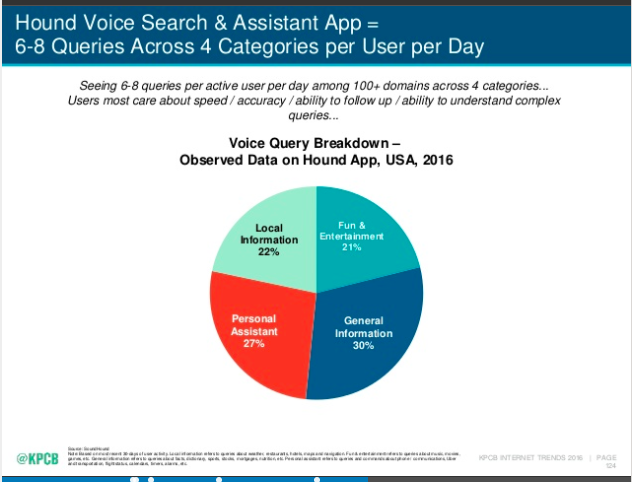
Considerations for Smart Speaker Optimization
The real question when it comes to smart speaker optimization is this: how different is it from regular SEO? Should you decide to optimize, there are a few unique factors to consider. First of all, there’s the obvious gap between a typed search query and a question asked aloud. Mainly, voice searches are typically asked in question form, so instead of typing “pizza near me” someone may ask “where is the closest pizza place?” So when thinking smart speaker optimization, think questions and long tail keywords. Another thing to keep in mind is the differences between the systems – Amazon Alexa, Google Home – and how the optimization strategies for each will differ.Create an Alexa Skill for Smart Speaker Optimization
Skills are to smart speakers what apps were to mobile. And just like every business has the ability to create its own apps, businesses can now create their own Alexa skills. But skills go beyond customer service and interaction; they can actually help improve and streamline your internal communications and tasks. In a business setting, Alexa can basically serve as your virtual assistant, and anyone is free to create and build an Alexa skill they want or need.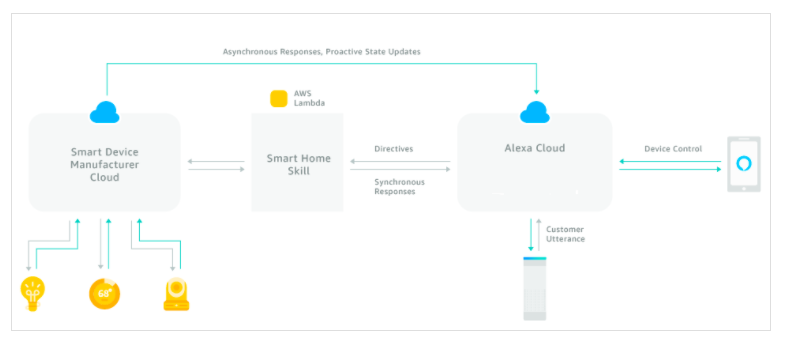
- Ease of use
- Sets clear expectations on what it can do
- Is consistently reliable
- Delivers fresh content
- Minimizes friction
Google Home – Focus on Featured Snippets for Smart Speaker Optimization
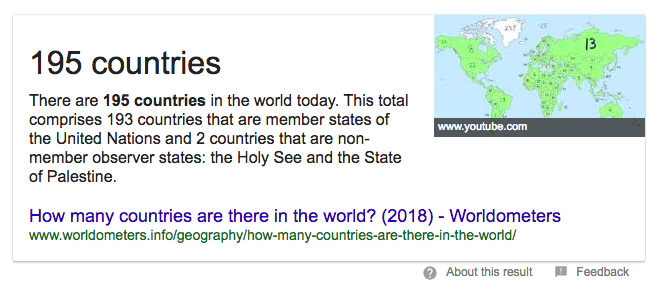
When it comes to Google Home, your best bet is through featured snippets. Featured snippets appear in the very first result in the SERPS, often called “position 0”. For example, if you type in “how many countries are there,” Google pulls this as the top result: